
Toyota Tundra Parts Diagram PDF: A Comprehensive Guide
Navigating the complexities of Toyota Tundra maintenance and repair often begins with a detailed parts diagram.
These diagrams, frequently available as PDFs, offer a visual breakdown of every component,
facilitating accurate identification and ordering of necessary parts for your truck.
Accessing the 2025 Tundra accessory eBrochure, for example, showcases customization options.
Understanding Toyota Tundra Parts Diagrams
Toyota Tundra parts diagrams are meticulously detailed visual representations of the vehicle’s components, serving as essential tools for both professional mechanics and DIY enthusiasts. These diagrams, often found in PDF format, illustrate the precise location and relationship of each part within the Tundra’s systems. They aren’t merely lists; they’re exploded views, allowing you to see how everything fits together.
Understanding these diagrams requires recognizing that each line, shape, and symbol represents a specific part. The 2025 Tundra accessory eBrochure exemplifies how Toyota presents detailed visuals for customization. Diagrams typically include part numbers, crucial for accurate ordering. They are categorized by system – engine, transmission, brakes, and so on – making it easier to pinpoint the area you’re working on. Familiarizing yourself with these conventions will significantly streamline your repair or modification process, ensuring you have the correct parts and understand their proper placement.
Why Use a PDF Parts Diagram?
PDF parts diagrams offer unparalleled convenience and accessibility for Toyota Tundra owners and mechanics. Unlike paper manuals, PDFs are easily searchable, zoomable for detailed inspection, and readily available on various devices – laptops, tablets, and smartphones. This digital format eliminates the risk of lost or damaged pages, ensuring you always have the information at your fingertips.
Furthermore, PDFs allow for easy printing of specific sections, reducing clutter and focusing on the relevant information. Considering accessories, like those detailed in the 2025 Tundra accessory eBrochure, diagrams ensure correct installation. They minimize errors during repairs by providing a clear visual guide, saving time and money. The ability to digitally share these diagrams with others also fosters collaboration and simplifies the troubleshooting process, making them an invaluable resource for any Tundra-related project.
Locating Official Toyota Tundra Parts Diagrams
Finding official Toyota Tundra parts diagrams requires navigating a few key resources. Toyota’s official website is a primary source, often providing access to parts catalogs and exploded views, though sometimes requiring a subscription or dealer access. Toyota dealerships themselves are excellent resources, capable of providing diagrams for specific models and years.
Additionally, Toyota’s parts websites, offering accessories like those in the 2025 Tundra eBrochure, frequently include supporting diagrams for installation and component identification. Online parts retailers authorized by Toyota also often host these diagrams. Be cautious of unofficial sources, as accuracy can vary. Prioritize diagrams directly from Toyota or authorized distributors to ensure compatibility and correct part identification for your Tundra’s repair or customization needs.

Specific Tundra Generation Diagrams
Each Toyota Tundra generation—2007-2013, 2014-2019, and 2020-2024—possesses unique parts diagrams reflecting design changes.
Accessing diagrams specific to your truck’s year is crucial for accurate repairs and accessory installations.
2007-2013 Toyota Tundra Parts Diagrams
The first-generation Tundra (2007-2013) diagrams often require searching through older Toyota parts catalogs, as newer resources may not prioritize these models. PDF versions can be found on various online forums dedicated to this generation, compiled by enthusiasts who’ve meticulously documented parts breakdowns. These diagrams are invaluable for maintaining the 5.7L or 4.6L engines common in these trucks, as well as the associated drivetrain components.
Focus on locating diagrams detailing the frame, suspension, and braking systems, as these are areas prone to wear and tear. Remember that accessory diagrams from this era are less comprehensive than current offerings, like the 2025 Tundra accessory eBrochure. However, understanding the basic layout from these older diagrams is essential for installing aftermarket parts or performing repairs. Utilize part numbers found within the diagrams when ordering replacements to ensure compatibility.

2014-2019 Toyota Tundra Parts Diagrams
Diagrams for the 2014-2019 Tundra generation are generally more accessible than those for older models, with Toyota’s official online parts portals offering detailed breakdowns. PDF versions can often be downloaded directly from these sites, or accessed through links provided in online Tundra communities. These diagrams are particularly useful for servicing the updated 5.7L engine and the eight-speed transmission introduced during this period.
Pay close attention to diagrams illustrating the interior components, as this generation saw significant upgrades in cabin technology and features. While the 2025 Tundra accessory eBrochure showcases current customization options, diagrams from this era help with understanding factory configurations. Focus on locating diagrams for the electrical system, as these trucks are known for their complex wiring harnesses. Always verify part numbers before ordering to avoid compatibility issues.
2020-2024 Toyota Tundra Parts Diagrams
Accessing parts diagrams for the 2020-2024 Tundra models benefits from Toyota’s increasingly digitized parts catalog system. PDF downloads are readily available through official Toyota parts websites, offering comprehensive views of the redesigned interior and updated powertrain components. These diagrams are crucial for understanding the i-FORCE and i-FORCE MAX hybrid systems introduced in 2022.
Focus on diagrams detailing the new suspension geometry and braking systems, as these represent significant changes from previous generations. While the 2025 Tundra accessory eBrochure highlights current customization, these diagrams aid in understanding factory setups. Utilize exploded views to identify specific fasteners and clips. Remember to cross-reference part numbers with Toyota’s online database to ensure accurate ordering, especially for hybrid-specific components. Detailed diagrams are essential for tackling repairs on these technologically advanced trucks.
Key Components & Diagram Sections
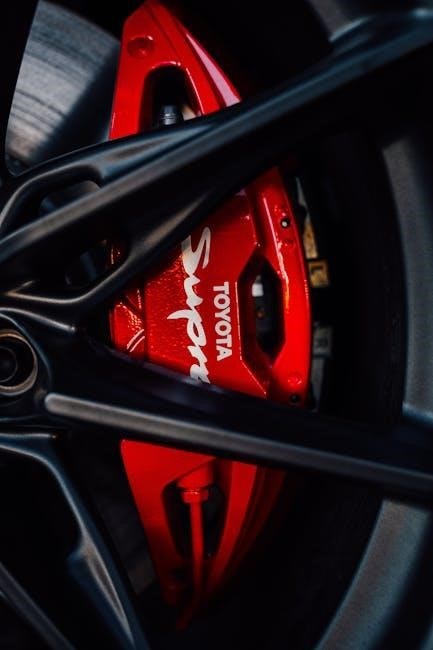
Toyota Tundra parts diagrams meticulously categorize components – engine, transmission, brakes, and suspension – offering detailed PDF views for efficient repair and maintenance.
Engine Parts Diagrams
Engine parts diagrams are arguably the most complex, showcasing the intricate network of components within your Toyota Tundra’s power source. These PDF diagrams typically break down the engine into manageable sections: the cylinder head, valve train, block assembly, and fuel/ignition systems.
Each part, from pistons and connecting rods to the crankshaft and camshaft, is clearly labeled with its corresponding part number. Detailed views illustrate the precise placement and relationship of each component, crucial for reassembly after maintenance or repair. Accessorizing, as shown in the 2025 Tundra brochure, doesn’t impact these core diagrams, but understanding them is vital before adding performance upgrades.
Diagrams often include exploded views, separating layers to reveal hidden parts and their connections. This level of detail is invaluable for diagnosing issues, identifying worn components, and ensuring correct part replacement. Utilizing these resources alongside a repair manual streamlines the repair process, minimizing errors and maximizing efficiency.
Transmission & Drivetrain Diagrams
Toyota Tundra transmission and drivetrain diagrams are essential for understanding the power transfer system. These PDF resources detail the internal workings of both automatic and manual transmissions, showcasing gears, clutches, torque converters, and related components. Separate diagrams illustrate the drivetrain – including the transfer case, driveshafts, and differentials – responsible for delivering power to the wheels.
Like engine diagrams, these are often presented as exploded views, allowing for a clear understanding of component placement and assembly. Part numbers are meticulously labeled, facilitating accurate ordering of replacement parts; Considering accessories, like those detailed in the 2025 brochure, won’t alter these core drivetrain schematics.
Diagrams aid in diagnosing issues like slipping gears, unusual noises, or differential problems. They’re invaluable for rebuilds, repairs, and routine maintenance, ensuring the longevity and optimal performance of your Tundra’s power delivery system.
Braking System Diagrams
Toyota Tundra braking system diagrams are critical for maintaining safe stopping power. These PDF resources provide detailed illustrations of the entire system, encompassing components like brake pads, rotors, calipers, master cylinders, brake lines, and ABS modules. Diagrams often differentiate between systems for various Tundra generations and trim levels.
Exploded views clearly depict the assembly of each component, aiding in repairs and replacements. Part numbers are prominently displayed, ensuring correct part selection. While accessories, such as those highlighted in the 2025 brochure, don’t directly impact the core braking system, understanding its components is vital for overall vehicle safety.
Diagrams are invaluable for diagnosing issues like brake fade, squealing noises, or uneven braking. They assist in performing tasks like pad replacements, rotor resurfacing, and brake line repairs, ensuring optimal braking performance and driver confidence.
Suspension & Steering Diagrams
Toyota Tundra suspension and steering diagrams are essential for understanding the complex interplay of components responsible for ride quality and handling. These PDF resources illustrate parts like shocks, struts, springs, control arms, ball joints, tie rod ends, and the steering rack. Detailed views showcase the assembly and relationship between these elements.
Access to these diagrams is crucial when addressing issues like uneven tire wear, steering wander, or rough rides. They aid in identifying worn or damaged parts requiring replacement. While the 2025 accessory brochure focuses on customization, maintaining a sound suspension is fundamental to vehicle performance.
Diagrams facilitate repairs such as replacing shocks, aligning the steering, or rebuilding the front suspension. Correct part identification, aided by clearly labeled part numbers, ensures a successful and safe repair process, restoring optimal handling and comfort.

Accessory Diagrams & Customization
Enhance your Tundra with accessories! PDF brochures, like the 2025 edition, detail installation and compatibility, showcasing options from Toyota and brands like ARB®.
Toyota Tundra Accessory Brochures (2025 Example)
Toyota’s 2025 Tundra accessory eBrochure, available as a PDF, serves as a comprehensive visual guide to personalization options. This resource details how to customize your truck, enhancing both its functionality and aesthetic appeal for years to come. The brochure highlights exterior accessories designed to protect the paint and maximize the vehicle’s capabilities, alongside interior upgrades focused on comfort and preservation.

Notably, the 2025 offerings expand beyond Toyota-branded parts, now including accessories from respected industry leaders such as ARB®, Carmate®, Dometic®, Go Rhino®, RIGID®, RAM Mount®, and Yakima®. Specific examples showcased include tailgate inserts – available in bright chrome or flat black – to emphasize the Tundra stamp, and TRD Pro bed lettering options in matte black or reflective silver. These diagrams within the brochure aid in understanding installation and visualizing the final look, making accessory selection straightforward.
TRD Accessory Parts Diagrams
Toyota Racing Development (TRD) accessories are engineered for both performance enhancement and aggressive styling, and detailed parts diagrams are crucial for proper installation. These diagrams, often found accompanying TRD accessory purchases or within broader Toyota accessory catalogs (like the 2025 Tundra brochure), visually break down each component and its relationship to the vehicle.
The 2025 accessory guide specifically mentions TRD Pro bed lettering, showcasing matte black and reflective silver options. Diagrams for these components illustrate the precise placement of individual letters within the stamped tailgate logo, emphasizing the strong adhesive backing for secure attachment. Access to these visual aids ensures correct alignment and a professional finish. Beyond lettering, TRD offers a range of parts – from suspension upgrades to exterior trim – all supported by detailed diagrams to facilitate confident installation and maximize the benefits of these performance-oriented accessories.
Exterior Accessory Installation Diagrams
Enhancing your Toyota Tundra’s exterior often involves installing accessories, and detailed installation diagrams are paramount for a successful outcome. The 2025 Tundra accessory eBrochure highlights a vast selection of exterior enhancements designed to protect and customize your truck. These diagrams, typically included with the accessory itself or available online, provide step-by-step visual guidance.
For example, the brochure mentions TRD Pro bed lettering, and accompanying diagrams would illustrate the precise application process, ensuring correct letter placement and adhesion. More complex accessories, like bed rails or running boards, require even more detailed diagrams showcasing mounting points, hardware specifications, and torque requirements. Access to these visual aids minimizes installation errors, protects your vehicle’s finish, and guarantees a secure and aesthetically pleasing result, maximizing the investment in your Tundra’s exterior customization.

Using the Diagrams Effectively
Mastering Toyota Tundra parts diagrams requires understanding part numbers, diagram views, and symbols.
The 2025 accessory brochure aids in visualizing customization,
enhancing repair accuracy and efficiency for your vehicle.
Decoding Part Numbers
Toyota part numbers are not random; they’re a carefully constructed alphanumeric code revealing crucial information about the component. Understanding this system is vital when using parts diagrams, like those found alongside the 2025 Tundra accessory brochure. Typically, the first digit indicates the parts division – for example, a ‘1’ often signifies body parts. Subsequent digits specify the part group, then the specific item within that group.
Crucially, variations in part numbers often denote slight changes in design or manufacturing dates. Using the correct part number ensures compatibility and proper fit. Diagrams will list these numbers alongside each component, allowing for precise ordering. Be mindful of supersessions – when a part number is replaced by a newer one. Toyota’s online parts resources often indicate these updates. Always double-check the part number against your vehicle’s specific year and model to avoid errors and ensure a successful repair.
Understanding Diagram Views & Symbols
Toyota Tundra parts diagrams aren’t simply pictures; they employ a standardized visual language. Exploded views are common, showcasing how components fit together in a sequential, disassembled manner. Different line styles indicate various elements – solid lines represent visible parts, while dashed or dotted lines show hidden components or suggested assembly paths.
Symbols are also key. Arrows often point to specific assembly directions or indicate torque specifications. Reference numbers correspond to a parts list, detailing each component’s name and part number. Familiarize yourself with these conventions before attempting any repair. The 2025 Tundra accessory brochure, while focused on accessories, demonstrates Toyota’s clear visual presentation style. Consistent symbol usage across all diagrams simplifies identification and reduces ambiguity, ensuring accurate part selection and installation.
Identifying Specific Parts
Successfully locating the correct part within a Toyota Tundra diagram relies on understanding the diagram’s organization and utilizing the accompanying parts list. Each component is assigned a unique reference number, cross-referenced in the list with its official Toyota part number and description. Begin by pinpointing the general area of the assembly you’re working on – engine, transmission, or suspension, for example.
Then, carefully trace the component’s shape and position within the diagram. The 2025 Tundra accessory brochure exemplifies Toyota’s detailed illustrations. Once identified, confirm your selection by comparing the diagram’s depiction with the part’s description in the list. Double-check the part number to ensure compatibility with your specific Tundra generation and trim level; Accurate identification prevents costly errors and ensures a successful repair.

Resources for Tundra Parts & Diagrams
Numerous online platforms and communities provide access to Toyota Tundra parts diagrams and information, including official Toyota websites and dedicated Tundra forums.
Toyota Parts Websites
Official Toyota parts websites represent the most reliable source for accurate Tundra parts diagrams and information. Toyota’s online parts catalog allows owners and technicians to search for components using either part numbers or detailed diagrams, ensuring correct identification for repairs and maintenance. These websites often feature exploded views, showcasing how parts fit together, which is invaluable for complex assemblies.
Furthermore, these platforms typically offer the ability to verify part compatibility based on your specific Tundra’s VIN (Vehicle Identification Number), minimizing the risk of ordering incorrect items. Accessing resources like the 2025 Tundra accessory eBrochure, available on toyota.com, demonstrates Toyota’s commitment to providing comprehensive support. While primarily focused on accessories, it exemplifies the detailed information available. Directly purchasing from Toyota ensures genuine parts and access to the latest diagrams, guaranteeing quality and fit.
Online Tundra Forums & Communities
Dedicated online forums and communities centered around the Toyota Tundra are invaluable resources for locating parts diagrams and gaining practical advice. Members frequently share links to diagrams, repair manuals, and even create their own annotated versions based on collective experience. These platforms often host discussions where users troubleshoot issues and identify specific parts needed for repairs, offering real-world insights.
Moreover, these communities can be a great place to find information on aftermarket parts and accessories, including those featured in brochures like the 2025 Tundra accessory eBrochure. While not official sources, experienced Tundra owners often possess extensive knowledge and can guide you towards reliable diagrams. However, always cross-reference information found on forums with official Toyota resources to ensure accuracy before making any purchases or repairs.
Third-Party Parts Retailers with Diagrams
Numerous third-party parts retailers specializing in Toyota components often integrate parts diagrams directly into their online catalogs. This allows customers to visually identify the correct part number and location within the Tundra’s assembly. These diagrams can be particularly helpful when tackling complex repairs or identifying obscure components not easily found through generic searches.
Many retailers offer exploded views, showcasing how parts fit together, which is beneficial for understanding the repair process. While browsing for accessories, like those detailed in the 2025 Tundra accessory eBrochure, these diagrams can clarify installation procedures. However, it’s crucial to verify the diagram’s accuracy and compatibility with your specific Tundra generation and trim level before relying on it for parts ordering or repairs. Always compare with official Toyota documentation when possible.

Troubleshooting with Diagrams
Parts diagrams are invaluable for diagnosing Tundra issues visually, pinpointing failing components, and ensuring correct replacement parts are ordered, like accessories from the 2025 brochure.
Diagnosing Issues Using Visual References
Employing Toyota Tundra parts diagrams for troubleshooting is a remarkably effective method. When faced with a mechanical problem, the diagrams act as a visual roadmap, allowing you to trace the affected system and identify potential culprits. For instance, if experiencing brake issues, a braking system diagram will illustrate each component – lines, calipers, rotors, and pads – enabling a systematic inspection.
Consider a scenario where a specific accessory isn’t functioning correctly; referencing the 2025 Tundra accessory eBrochure and associated diagrams can quickly reveal wiring connections or mounting points. This visual approach minimizes guesswork and streamlines the diagnostic process. Diagrams help confirm if a part is even present based on the vehicle’s configuration, preventing wasted time on nonexistent issues. They are especially useful when dealing with complex assemblies, offering exploded views that clarify component relationships.
Ultimately, diagrams empower both novice and experienced mechanics to approach repairs with confidence and precision.
Identifying Replacement Parts
Once a faulty component is identified using a Toyota Tundra parts diagram, securing the correct replacement becomes straightforward. Diagrams clearly display each part’s unique number, crucial for accurate ordering. These numbers act as a universal identifier, ensuring compatibility regardless of the retailer. For example, when customizing with accessories detailed in the 2025 Tundra accessory eBrochure, the diagram’s part numbers guarantee a perfect fit.

Furthermore, diagrams often illustrate multiple views of a component, showcasing its orientation and relationship to surrounding parts. This is particularly helpful when dealing with complex assemblies. Always double-check the diagram’s applicability to your specific Tundra year and model, as parts can vary significantly between generations. Utilizing official Toyota diagrams minimizes the risk of ordering incorrect or incompatible parts, saving time and preventing further complications.
Accurate part identification is paramount for successful repairs and maintaining your Tundra’s reliability.
Repair Manuals & Diagram Integration
Toyota Tundra repair manuals are invaluable resources, and their effectiveness is significantly enhanced when used in conjunction with detailed parts diagrams. Manuals provide step-by-step instructions for repairs, while diagrams visually pinpoint the location and assembly of components. The 2025 Tundra accessory eBrochure, while focused on customization, exemplifies the level of detail Toyota provides in its documentation.
Diagrams within repair manuals often reference specific page numbers or sections, streamlining the repair process. They illustrate exploded views, showcasing how parts fit together, and highlight critical torque specifications. Integrating both resources allows for a comprehensive understanding of the repair, reducing errors and ensuring a professional outcome. Accessing both a manual and a corresponding parts diagram is essential for tackling complex repairs confidently.
Ultimately, this synergy empowers both novice and experienced mechanics to maintain their Tundra effectively.